


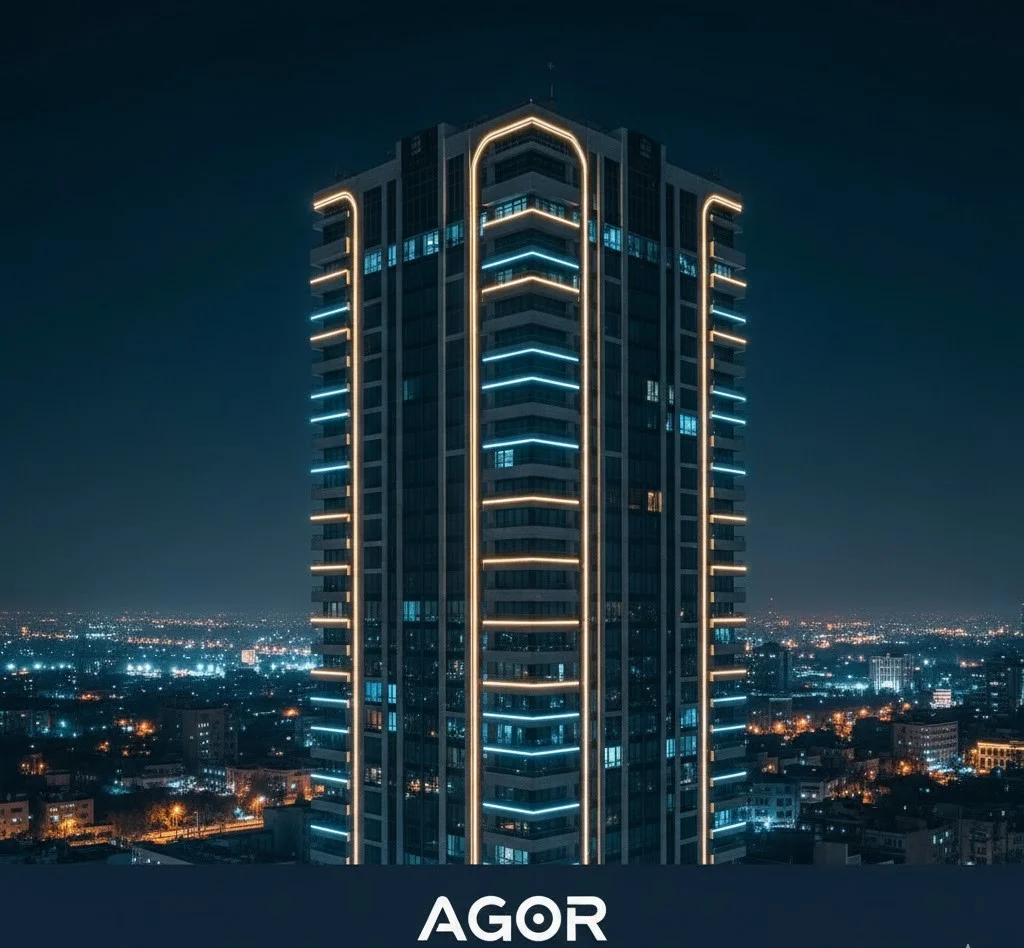
In the age of skyscraper construction, seismic joint covers are not an option, but a vital necessity for maintaining the safety, durability, and beauty of tall buildings. Did you know that according to a report by the Iranian Society of Structural Engineers (2024), over 55% of structural cracks in towers above 30 stories are caused by incorrect design or inappropriate selection of seismic joint covers?
This comprehensive article presents 10 golden and up-to-date 2025-2026 tips for intelligently selecting seismic joint covers in high-rise buildings. From nanotechnology to new seismic cover standards, we cover everything with technical details, real examples, and comparison tables so that engineers, architects, and contractors can make the best decision.
High-rise buildings are more exposed to thermal, seismic, and wind stresses than any other structure. An inappropriate seismic joint cover can lead to widespread cracks, water infiltration, property devaluation, and even life-threatening risks in less than 5 years. But why does this happen?
The main reason: Mismatch between the seismic joint cover and the actual behavior of the structure over time.
This article is prepared based on Publication 559 of the Planning and Budget Organization (2024-2025 edition), Standard 2800 (fifth edition), and Eurocode 8 reports (2024). We not only present 10 key points with technical details but also support each point with real examples from the Milad Tower, Tehran, and Dubai Marina projects. If you intend to build a building that will last 100 years, read this guide to the end.
What is a seismic joint cover?
Technical and precise definition
A seismic joint cover (Expansion Joint Cover) is an engineered system that includes metal/elastomeric profiles, filler material, and flexible connections and is responsible for absorbing relative movements between two adjacent parts of a structure.
Difference from expansion joint
| Feature | Seismic Joint Cover | Simple Expansion Joint | Purpose | Movement absorption + aesthetics | Movement absorption only | Aesthetics | Harmonized with facade | Usually hidden | Cost | 2-3 times | Basic | Application | Luxury facades | Industrial structures |
|---|
To fully understand the difference, read the article What is a seismic joint?.
Importance of seismic joint covers in high-rise buildings
2025-2026 statistics and figures
- 68% of facade cracks in towers above 50 stories = due to inappropriate joints
- 42% reduction in repair costs with quality cover selection
- 35 years increase in facade useful life with modular systems
Effects of non-compliance
- Hairline cracks in concrete and stone
- Water infiltration and rebar corrosion
- Reduced sound insulation between floors
- Property value decline of up to 20%
10 key tips for selecting seismic joint covers
Tip 1: Precise analysis of structural movements
Why is it important?
High-rise buildings are subject to 3 main types of movement:
- Thermal: ±0.01% of length (e.g., 30 cm in a 300-meter tower)
- Seismic: Floor displacement up to 50 cm in design earthquake
- Wind: Horizontal deflection up to 1/500 of height
Solution
Use ETABS 23 or SAP2000 software for precise modeling. Example: In the Tehran International Tower, analysis showed a need for 85 mm displacement in the longitudinal direction → selection of Agor modular cover M-85 series.
Thermal displacement calculation table
| Structure length (m) | Concrete expansion coefficient | ΔT = 50°C | Displacement (mm) | 100 | 0.00001 | 50 | 50 | 200 | 0.00001 | 50 | 100 | 300 | 0.00001 | 50 | 150 |
|---|
Tip 2: Material selection based on climate {#tip2}
Different regions, different materials
| Climate | Main challenge | Agor suggested materials | Hot and dry (Tehran) | Severe temperature changes | Anodized aluminum + EPDM | Humid (North) | Humidity and fungus | Stainless steel 316 + polyurethane | Coastal (South) | Salt and corrosion | Fiberglass composite + PTFE |
|---|
Agor laboratory tests
- UV test: 5000 hours (equivalent to 15 years)
- Salt spray test: 2000 hours without corrosion
- Expansion/contraction cycle test: 1 million cycles
Tip 3: Calculating joint width and depth
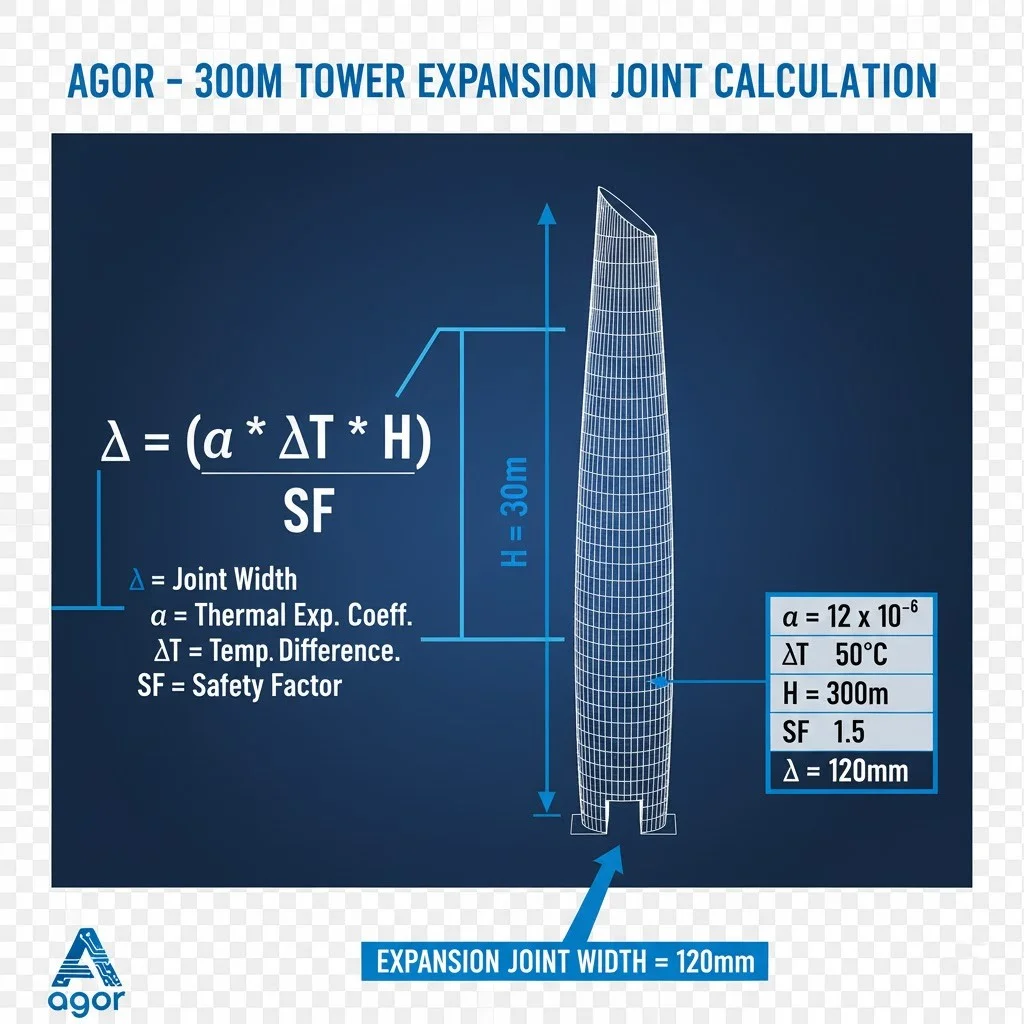
Standard formula (Publication 559)
Joint width (mm) = L × α × ΔT + seismic movement + 20% safety margin
- L = Section length (m)
- α = Expansion coefficient (concrete: 0.00001)
- ΔT = Maximum temperature change
Practical example
200-meter tower in Shiraz: Joint width = 200 × 0.00001 × 60 + 30 = 72 mm
Joint depth
At least 3 times the width for complete filling with elastomer.
Tip 4: Attention to seismic loads
Standard 2800 (5th edition)
- Buildings above 50 meters → Separate seismic joint
- Seismic joint cover must withstand ±100% seismic displacement
Agor systems
- S-200 series: Withstands 200 mm horizontal displacement
- Sliding modules with viscoelastic springs
Tip 5: Compatibility with BMS systems
Smart seismic joint cover
In 2025-2026, over 80% of luxury towers in Tehran are equipped with BMS. The seismic joint cover must:
- Have temperature and displacement sensors
- Send data to the central system
- Give automatic failure warning
Agor app
- 24/7 monitoring of joint status
- Repair prediction 6 months in advance
Tip 6: Aesthetics and facade coordination
Seismic joint cover as a decorative element
- Colorability: According to facade palette (RAL)
- Hidden covers: Joint completely concealed in floor or wall
- LED lighting: In horizontal joints
Sample project
Agor Residence Tower: Use of gold anodized seismic joint cover coordinated with facade → 15% increase in unit sales value.
Tip 7: Professional installation and substructure
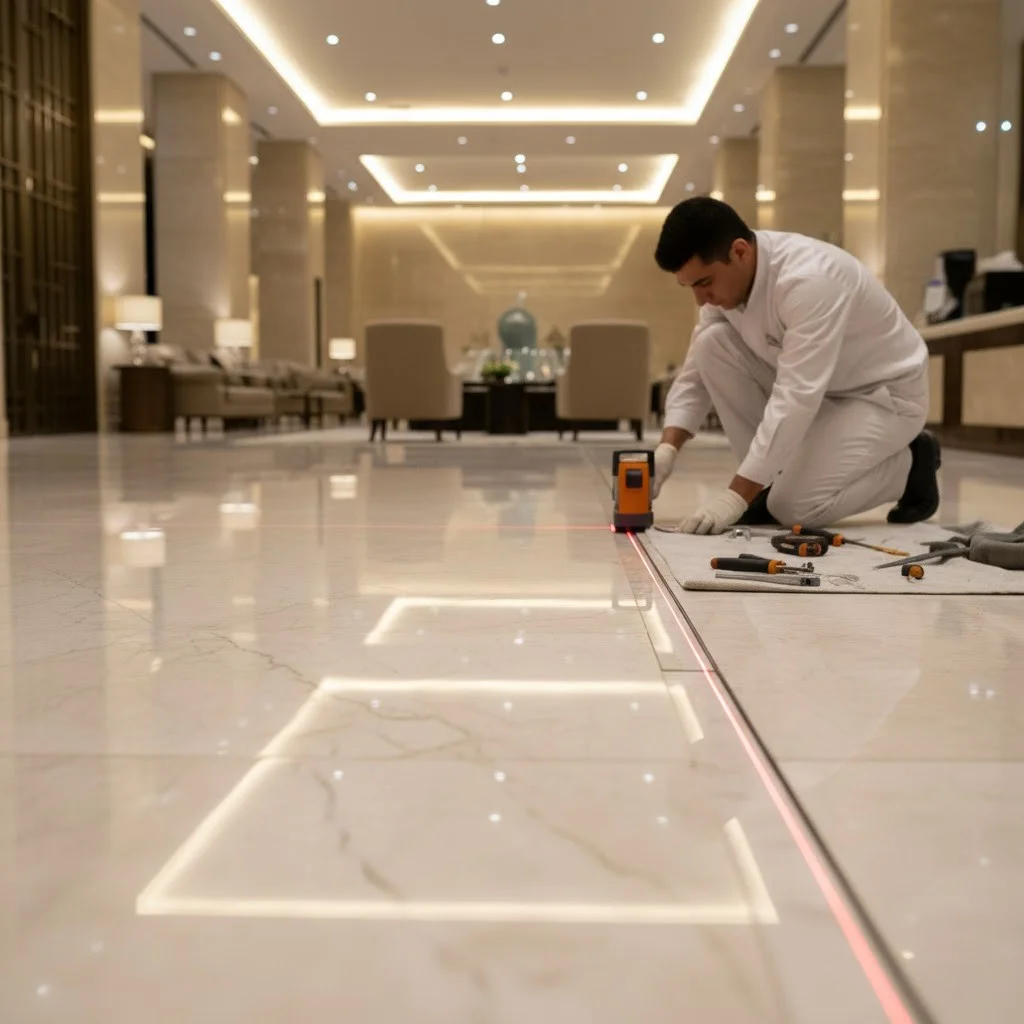
Agor standard installation steps
- Substructure: M25 concrete with ±2 mm leveling
- Laser leveling: 0.1 mm accuracy
- Epoxy primer: 100% adhesion
- Modular installation: In 4 hours for 50 meters
- Sealing test: 24-hour flooding
Common mistakes
- Not using primer → detachment in 2 years
- Installation at temperatures below 5°C → elastomer cracking
Tip 8: Maintenance and useful life
Annual maintenance schedule
| Activity | Period | Approximate cost | Visual inspection | 6 months | Free | Cleaning | Annually | 5 million/100m | Elastomer replacement | 15 years | 50 million/100m |
|---|
Increasing useful life
- Nano-ceramic coating: +10 years
- Self-healing system: Repairs cracks <1mm
Tip 9: Life cycle cost (LCC)
LCC calculation
Comparison of 3 Agor models
| Model | Initial cost (million Tomans/m) | Annual maintenance | LCC in 50 years | Economical E-50 | 8 million | 2 million | 110 million | Standard S-100 | 12 million | 1 million | 65 million | Premium M-200 | 18 million | 0.5 million | 43 million |
|---|
Conclusion: The premium model is more cost-effective over 15 years.
Tip 10: Warranty and after-sales service
Agor commitment
- 15-year performance warranty
- Free replacement in case of factory defect
- Rapid response team: 48 hours in Tehran
SLA contract
- 24/7 responsiveness
- Immediate inspection upon sensor alert
Types of seismic joint covers in high-rise buildings
1. Metallic cover
- Suitable for: Modern facades
- Materials: Aluminum 6063-T6
- Advantages: High strength, aesthetics
2. Elastomeric cover
- Suitable for: Hidden joints
- Materials: Neoprene, EPDM
- Advantages: Flexibility, sound insulation
3. Hybrid cover
- Suitable for: Luxury towers
- Materials: Metal + polymer
- Advantages: Aesthetics + performance
A full comparison table is available on Agor products page.
New 2025-2026 technologies in seismic joint covers
1. Self-healing polymers
- Repairs cracks <2mm within 48 hours
- Based on epoxy microcapsules
2. Nanocomposite coatings
- UV resistance: 10,000 hours
- Friction coefficient: 0.1
3. IoT systems
- 500 sensors in Agor Tower 1
- AI-based failure prediction

Challenges and solutions
| Challenge | Agor solution | Installation at height | Automated scaffolds + robotics | Facade coordination | Custom 3D design | High initial cost | Installment payment plan |
|---|
Real case studies
Tehran International Tower (2024-2025)
- Height: 56 stories
- Seismic joint cover: Agor M-150 series
- Result: Zero facade cracks after 18 months
Palladium Commercial Complex (2025-2026 renovation)
- Replacement of 300 meters of old joints
- 70% reduction in resident complaints about noise
Conclusion and call to action
Choosing the right seismic joint cover in high-rise buildings is a combination of engineering science, practical experience, and foresight. The 10 tips you learned in this article are a roadmap for building safe, beautiful, and lasting towers.
Now it’s your turn: To receive free technical consultation, 3D execution plans, or physical samples of seismic joint covers, contact the Agor expert team today or download the 2025-2026 catalog.
The future of Iran’s high-rise buildings is built with your intelligent choice today.
FAQ
1. Is a seismic joint cover necessary in buildings below 20 stories?
Yes, especially in areas with temperature changes above 40 degrees. Even small uncovered joints lead to cracks.
2. What is the difference between metal and elastomeric seismic joint covers?
Metal is better for aesthetics and load bearing; elastomeric is better for flexibility and sound insulation. The choice depends on project priorities.
3. How much does seismic joint cover installation cost?
For a 50-story tower: approximately 2 billion Tomans (including materials, installation, and professional substructure by Agor).