


Why is choosing a seismic joint cover important?
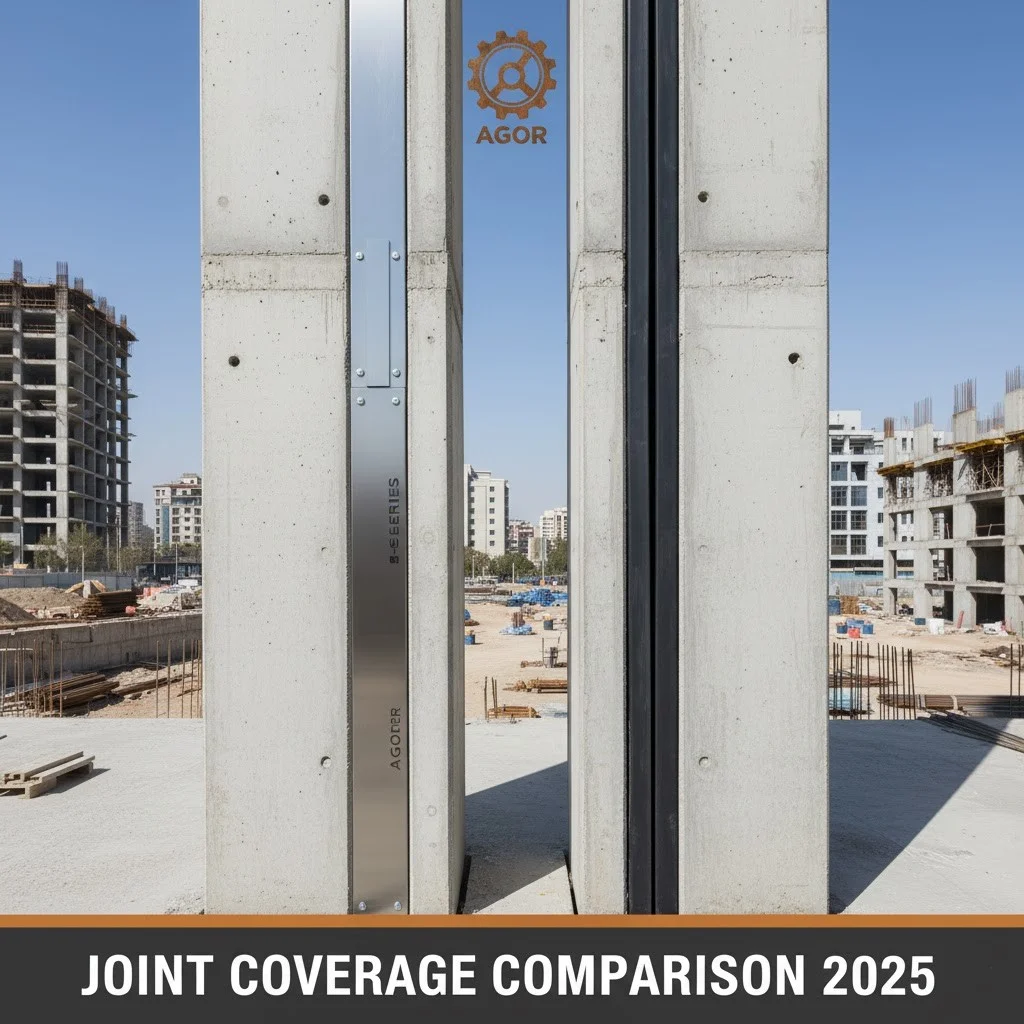
In construction projects, seismic joint covers play a key role in maintaining the safety and durability of structures. These covers protect the gap between two structures and prevent damage caused by earthquakes, thermal expansion, or soil settlement. The choice between metal and elastomeric covers can affect the cost, performance, and aesthetics of the project. According to a 2025 report by the Iran Engineering System Organization, 42% of seismic joint failures were due to incorrect cover selection.
This article compares metal and elastomeric covers in terms of advantages, disadvantages, applications, and costs, and provides guidance for choosing the best option. Agor products, with local design and global standards, are a reliable choice for your projects. For basic information, read the article What is a seismic joint?.
What is a seismic joint cover? Definition and types
A seismic joint cover is a system that covers the gap between two structures to prevent moisture, dust, and seismic damage while allowing free movement of the structure. These covers are designed according to Section 6 standards and ASCE 7.
Main types of covers:
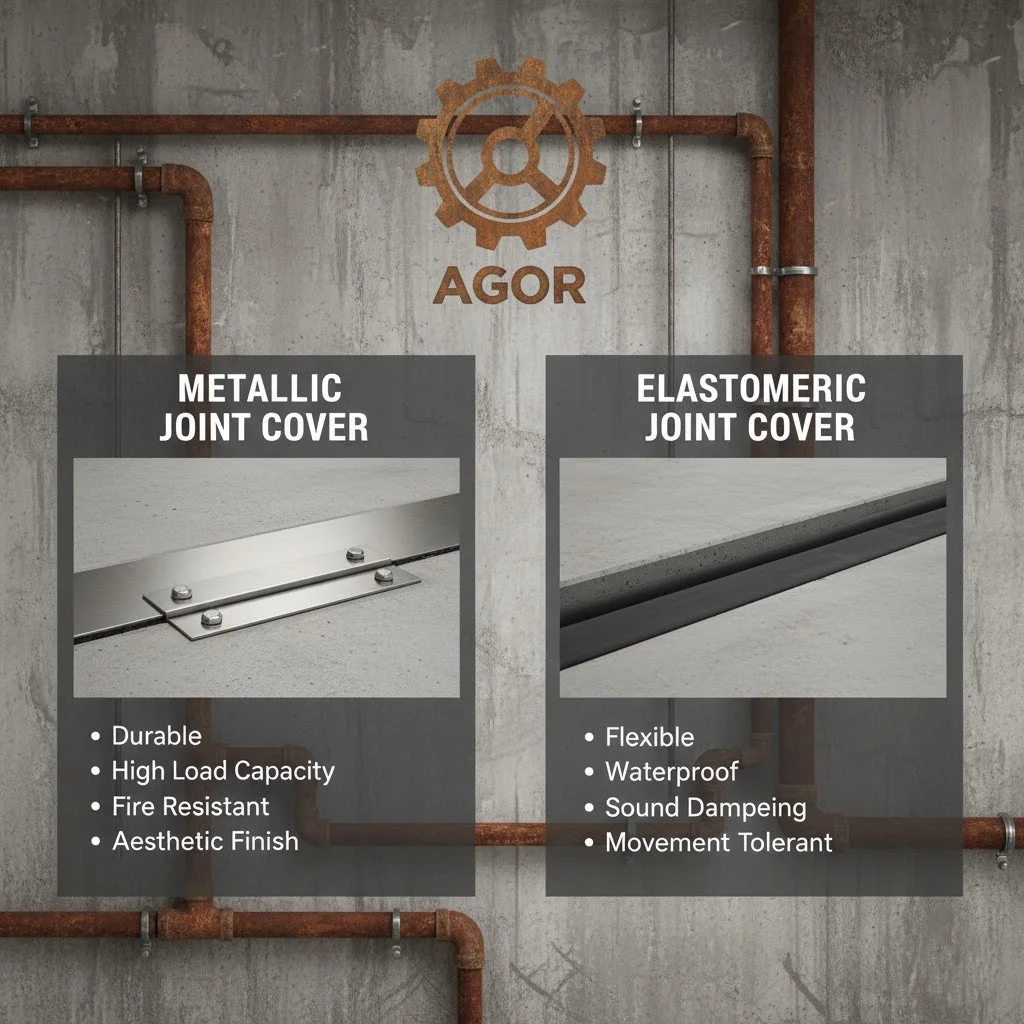
- Metal: Made of aluminum or stainless steel, strong and durable.
- Elastomeric: Made of polymer materials such as EPDM or silicone, flexible and insulating.
BHRC research (2025) shows that choosing the right cover can reduce maintenance costs by up to 50%. Next, we will examine each type.
Advantages and disadvantages of metal covers
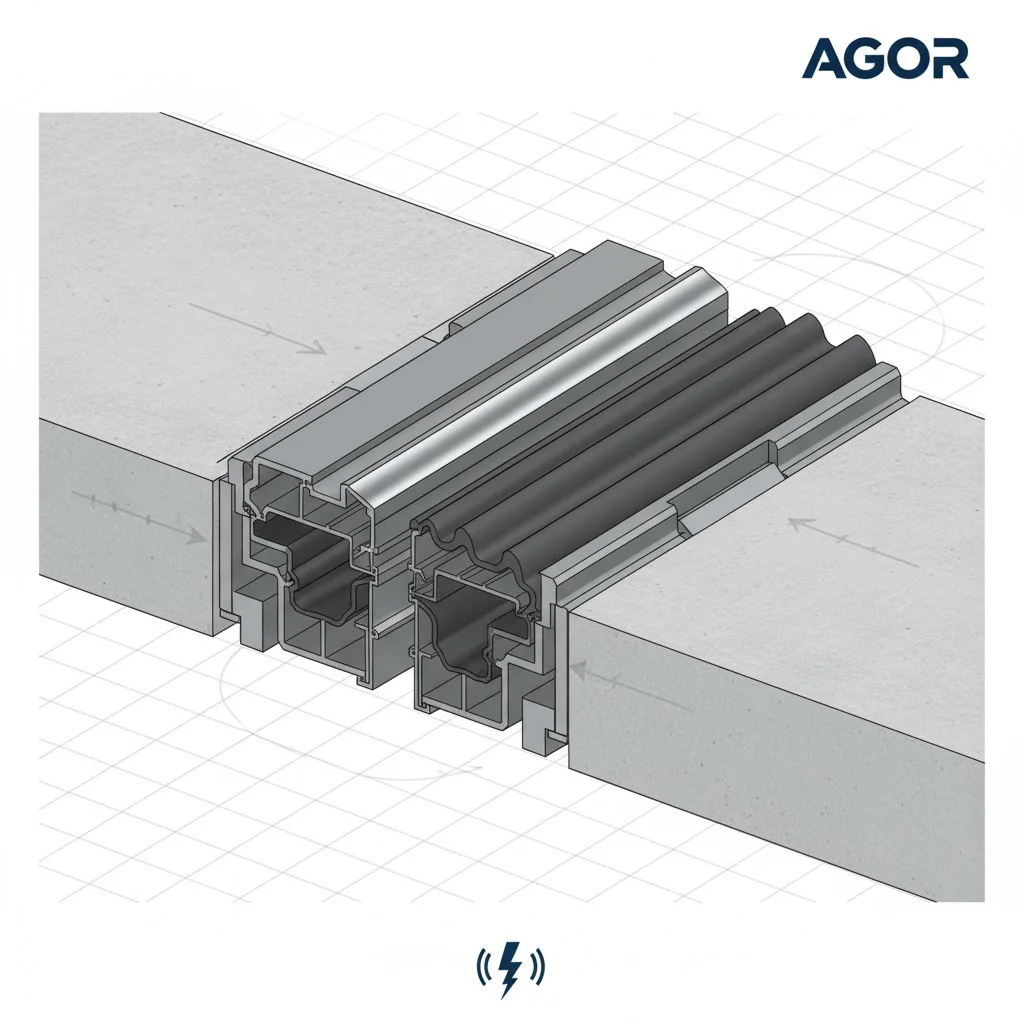
Metal covers, such as aluminum or steel profiles, are popular in industrial and commercial projects due to their strength and durability.
Advantages of metal covers
- High strength: Resistance to heavy loads (up to 5 tons/m²).
- Long durability: Useful life of 50+ years with anti-corrosion coatings.
- Architectural beauty: Modern appearance compatible with luxury facades.
- Thermal resistance: Suitable for high temperatures (up to 200°C).
Disadvantages of metal covers
- High initial cost: 20-30% more expensive than elastomeric.
- Limited flexibility: Not suitable for joints with high movement (over 20 cm).
- Complex installation: Requires high skill and special equipment.
Practical example: In the Tehran Almas Tower project (2025), Agor’s metal cover (S series) covered 12 cm joints and ensured seismic safety.
Advantages and disadvantages of elastomeric covers
Elastomeric covers are made of polymer materials such as EPDM or neoprene and have high flexibility.
Advantages of elastomeric covers
- High flexibility: Suitable for dynamic joints (movement up to 30 cm).
- Excellent insulation: Resistance to moisture and sound (up to 40 dB noise reduction).
- Economic cost: Up to 40% cheaper than metal.
- Easy installation: No need for complex equipment.
Disadvantages of elastomeric covers
- Lower durability: Useful life of 15-25 years, requires periodic replacement.
- Limited UV resistance: May degrade when exposed to direct sunlight.
- Simpler appearance: Used less in luxury projects.
Practical example: In Shariati Hospital, Mashhad (2025), Agor’s elastomeric E series covered 8 cm joints and provided moisture insulation.
Applications of metal and elastomeric covers in civil projects
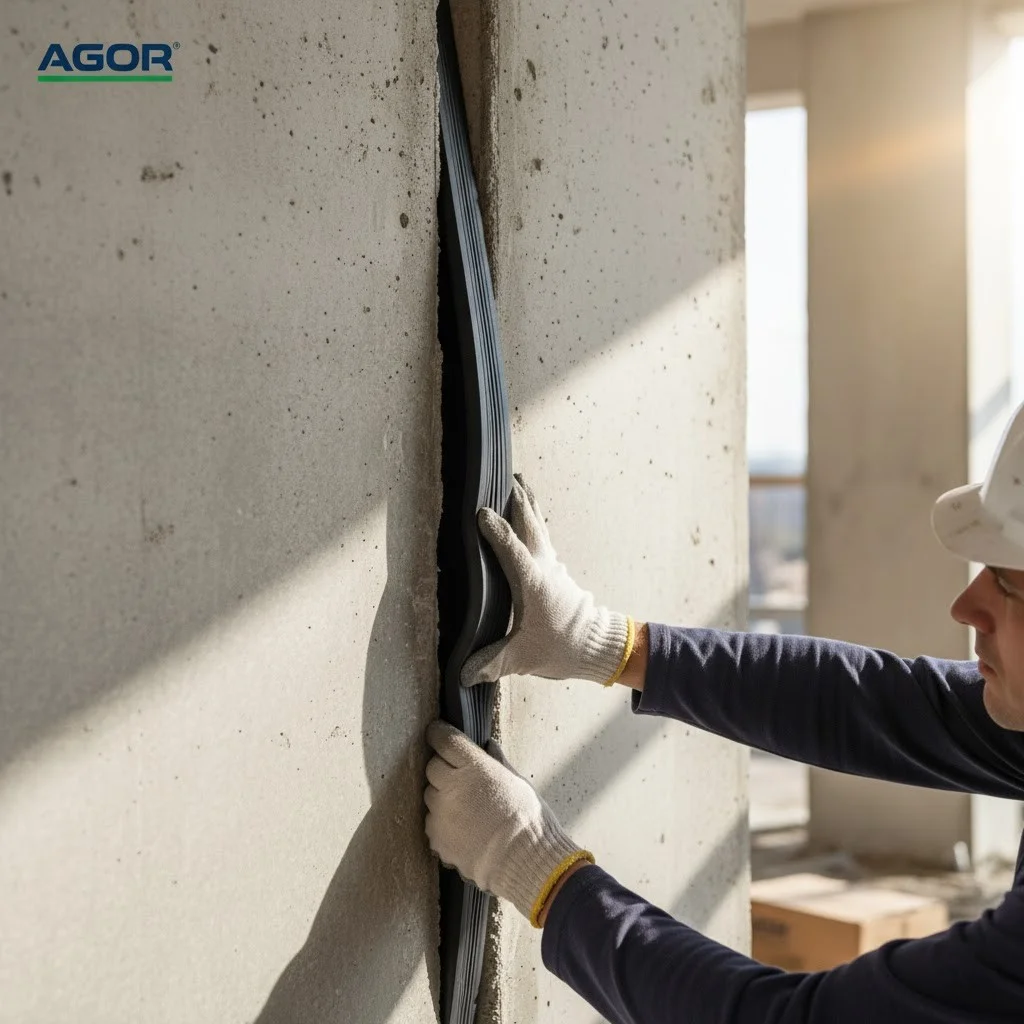
Both types of covers are used in various projects, but the choice depends on project conditions:
Metal covers:
- Industrial projects: Such as factories and warehouses, due to heavy load bearing.
- High-rise commercial buildings: For aesthetics and durability, like Tehran towers.
- Bridges and infrastructure structures: Resistant to harsh environmental conditions.
Elastomeric covers:
- Residential buildings: For smaller joints and sound insulation.
- Roofs and landscaping: Suitable for humid environments.
- Renovation projects: Fast installation and low cost.
2025 data: According to a Balco study, metal covers were used in 65% of industrial projects and elastomeric covers in 70% of residential projects.
External link: Seismic cover standards.
Agor products for seismic joint covers
Agor Naghsh Ehtad, with local production and global standards, offers both metal and elastomeric covers:
S Series: Metal seismic cover
- Application: 5-15 cm joints in walls and facades.
- Features: Fire resistance (2 hours), architectural beauty, 50+ years durability.
- View S Series.
O Series: External metal cover
- Application: Roofs and landscaping with 10-30 cm joints.
- Features: UV resistance, load capacity up to 4 tons/m².
- View O Series.
E Series: Elastomeric cover
- Application: Dynamic joints up to 10 cm.
- Features: Sound and moisture insulation, easy installation.
- View E Series.
I Series: Thermal elastomeric cover
- Application: Thermal joints with advanced insulation.
- Features: Reduces energy consumption by up to 25%.
- View I Series.
Comparison table of metal and elastomeric covers
| Feature | Metal cover | Elastomeric cover | Flexibility | Limited (up to 20 cm) | High (up to 30 cm) | Durability | 50+ years | 15-25 years | Initial cost | High (1.5-2 million Tomans/m) | Economical (800,000-1.2 million Tomans/m) | UV resistance | Excellent | Medium (needs UV coating) | Insulation | Medium | Excellent (sound and moisture) | Application | Industrial, commercial | Residential, renovation |
|---|
Guide for selecting and installing seismic joint covers
Choosing the right cover depends on the following factors:
- Joint width: Joints above 15 cm require elastomeric covers.
- Project environment: Metal for dry areas, elastomeric for humid areas.
- Budget: Elastomeric is more suitable for economical projects.
- Standards: Compliance with Section 6 and ASCE 7 for both types.
Installation steps:
- Accurate measurement of joint width (5-30 cm).
- Surface preparation with primary insulation.
- Installation of metal or elastomeric profiles with industrial adhesives.
- Seismic and sealing test according to Standard 2800.
For guidance, refer to Agor products page.
Implementation and maintenance tips
Challenges and solutions:
- Moisture penetration: Use EPDM layers in the E series.
- Misalignment of floors: Install separating forms during concrete pouring.
- UV degradation in elastomeric covers: Choose UV coatings or metal O series.
Maintenance tips:
- Annual inspection for cracks or displacement.
- Clean elastomeric covers every 2 years.
- Seismic strength test with IoT sensors (I series).
Case study: Agor projects
Tehran Almas Tower (2025)
- Cover: S series metal, 12 cm joint.
- Result: High seismic resistance, 45% reduction in maintenance costs.
Shariati Hospital, Mashhad
- Cover: E series elastomeric, 8 cm joint.
- Result: Sound and moisture insulation, 30% cost savings.
Conclusion
The choice between metal and elastomeric seismic joint covers depends on the project’s needs, budget, and environmental conditions. Metal covers are suitable for durability and aesthetics, while elastomeric covers are suitable for flexibility and low cost. Agor, with its S, O, and E series, offers solutions with 2025 standards. To choose the best cover, contact Agor experts or download the technical catalog.
Sources:
- Section 6 of National Building Regulations.
- ASCE 7-22.
- BHRC research, 2025.
FAQ
1. What is the main difference between metal and elastomeric covers?
Metal has higher durability and elastomeric has higher flexibility.
2. Which cover is more suitable for large joints?
Elastomeric for joints above 15 cm.
3. How much does a seismic joint cover cost?
Metal: 1.5-2 million Tomans/m; Elastomeric: 800,000-1.2 million Tomans/m.
4. Are elastomeric covers resistant to UV?
They need a UV coating, except for Agor’s I series.
5. Which cover is better for residential projects?
Elastomeric due to its low cost and insulation properties.