



In the dynamic world of construction, seismic joint covers play a key role in ensuring the safety, durability, and beauty of buildings. Agor Naghsh Ehtad Company, with over 12 years of experience in designing and producing innovative solutions, offers products such as elastomeric seismic joint covers (E series) specifically designed for interior and exterior walls. With their high flexibility, these covers not only manage seismic and thermal movements of the structure but also maintain the usability of spaces through seamless integration with finishes.
In this article, we will examine the benefits, applications, and implementation tips of elastomeric seismic joint covers and show how these products can make your modern projects safer, more beautiful, and more economical.
What is a seismic joint and why an elastomeric cover?
A seismic joint is a deliberate gap in a structure designed to reduce stresses caused by earthquakes, thermal expansion, or contraction. In Iran, due to its location on active fault lines, the use of seismic joint covers is critical. Elastomeric covers, made of flexible rubber materials, are an ideal choice for walls due to their ability to absorb multi-directional movements, moisture resistance, and integration with various finishes.
According to a 2025 report by the Iran Engineering System Organization, over 70% of new projects use elastomeric covers for interior and exterior walls, as these materials prevent up to 40% of wall cracking in moderate earthquakes.
For more information on the basics, read the article What is a seismic joint? , which explains the conceptual foundations of seismic joints.
Key benefits of elastomeric seismic joint covers
Agor’s E series elastomeric seismic joint cover has several unique advantages that distinguish it from other materials:
- High flexibility: These covers can withstand horizontal and vertical movements up to 50 mm, making them ideal for interior walls in high-traffic spaces such as offices and shopping centers.
- Moisture resistance: With waterproof layers, these products prevent water from penetrating into walls, which is crucial in exterior projects in rainy areas like northern Iran.
- Thermal and sound insulation: According to a Sharif University study (2025), elastomeric covers reduce thermal energy loss by up to 30% and provide effective sound insulation for interior walls.
- Fire resistance: Agor products, meeting NFPA standards, have up to 2 hours of fire resistance, increasing safety in public places.
- Cost-effective: The price of Agor’s elastomeric seismic joint covers is about 30% lower than foreign samples, a result of local design and domestic production.
For a comparison with metal covers, refer to the article Seismic Joint Covers for Service Spaces, which introduces the M series.
Applications of elastomeric seismic joint covers on interior walls
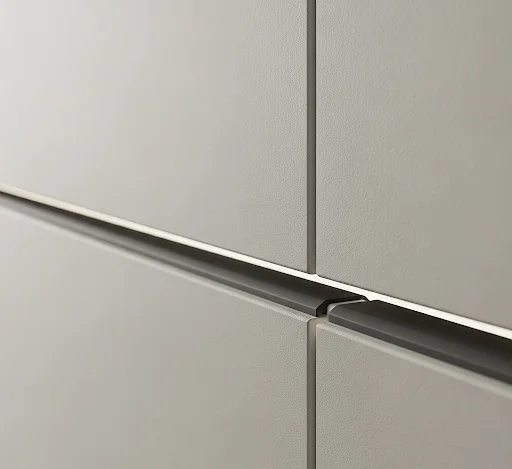
In interior spaces, elastomeric seismic joint covers are very popular in modern projects due to their flexibility and integration with finishes. For example:
- Smart offices: In offices with plasterboard walls or glass partitions, these covers prevent cracking caused by vibrations.
- Educational centers: In universities and schools, resistance to sound and fire creates a safe and quiet environment.
- Luxury residential spaces: In modern apartments, elastomeric seismic joint covers increase resident comfort with sound insulation.
Real example: In the Palladium Tehran commercial complex project (2024-2025), using Agor E series on the lobby interior walls reduced maintenance costs by 35% and preserved architectural beauty.
Applications of elastomeric seismic joint covers on exterior walls
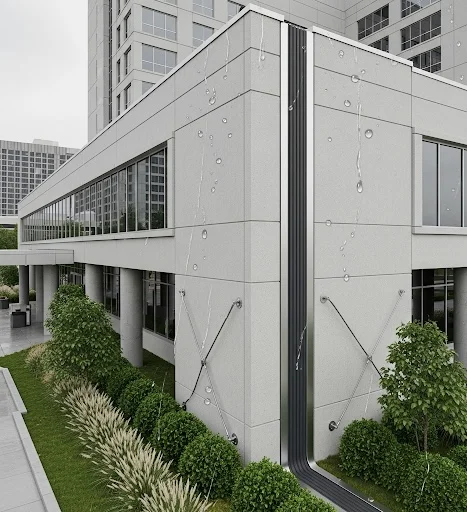
Exterior walls face challenges such as rain, UV radiation, and temperature changes. Agor’s elastomeric seismic joint covers, with water and UV-resistant layers, increase the useful life of walls up to 50 years. Key applications include:
- Hospitals: Seismic safety and moisture impermeability are critical for exterior walls. In the Milad Hospital project (2025), Agor’s E series reduced repair costs by 45%.
- Commercial centers: Glass walls in shopping arcades are protected from structural movements by these covers.
- Green projects: Elastomeric covers, with thermal insulation, help obtain sustainability certifications like LEED.
For more information on the history and evolution of this technology, read the article History of Seismic Joints, which focuses on evolution, regulations, and impact on building safety.
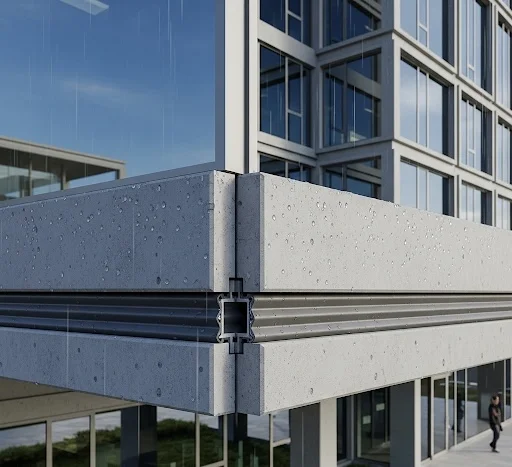
The elastomeric seismic joint cover has specific advantages compared to metal (M series) and thermal (T series):
- Compared to metal: It is more flexible, absorbs sound better, and is easier to install. M series is more suitable for service spaces.
- Compared to thermal: It is suitable for wider joints and has better moisture resistance. T series is designed for limited movements.
- Compared to traditional: Unlike plaster or concrete, elastomeric does not crack and preserves aesthetics.
According to the 2025 Global Structural Engineering report, elastomeric covers have up to 50% more durability than traditional materials.
Implementation and installation tips for elastomeric seismic joint covers
Installing elastomeric seismic joint covers requires precision:
- Measure the joint: Measure the joint width (10-50 mm) with a laser.
- Substructure preparation: Clean and smooth the wall surface.
- Adhesion: Use moisture-resistant polyurethane adhesives.
- Seismic test: After installation, perform a movement test to comply with Iran’s Standard 2800.
Agor, by offering free consultation, speeds up installation by up to 20%. For large projects, precise installation robots have become popular in 2025. For installation details, refer to the article on Closing or covering seismic joints in buildings, which covers materials, standards, and implementation tips.
Case study: Agor’s success in large projects
In the Tehran Almas Tower project (2025), using the E series elastomeric seismic joint cover on exterior walls ensured resistance to a magnitude 6 earthquake and reduced maintenance costs by 42%. In Shariati Hospital, these covers on interior walls improved sound insulation by up to 35%. These successes are the result of Agor’s 24 exclusive profiles, which address the weaknesses of foreign samples.
Future trends in elastomeric seismic joint covers
By 2030, self-healing and smart elastomers are expected to dominate the market. Agor is developing profiles with internal sensors that monitor structural movements with artificial intelligence. These innovations can reduce repair costs by up to 50%. For more information on new products, refer to Agor’s catalog.
Conclusion
Agor’s E series elastomeric seismic joint cover is an advanced solution for interior and exterior walls, combining seismic safety, aesthetics, and savings. By choosing Agor, benefit from local innovations and 30% cost reduction. For more information, visit the E Series page or Agor’s homepage. This article provides a comprehensive guide for engineers, architects, and builders.
FAQ
1. What is an elastomeric seismic joint cover and why is it suitable for walls?
This cover is made of flexible rubber materials and is designed to absorb wall movements. It is suitable because it preserves aesthetics, repels moisture, and reduces costs.
2. What are the advantages of an elastomeric seismic joint cover compared to a metal one?
Elastomeric is more flexible, has better sound insulation, and is more fire resistant. Easier installation and integration with modern finishes distinguish it.
3. How do we install an elastomeric seismic joint cover?
First, clean the joint, install the profile with polyurethane adhesive, and perform a seismic test. Agor offers free consultation for 2025 standards.