




Iran is one of the countries with high earthquake risk in the world. Buildings constructed without observing seismic reinforcement principles are vulnerable to moderate and severe earthquakes. One of the key factors in earthquake-resistant building design is the seismic joint and the implementation of seismic joint covers. A seismic joint cover refers to the distance designed between two buildings or different parts of a structure to prevent their collision during an earthquake or possible settlements. The absence of this distance or its incorrect implementation causes the pounding effect and double destruction.
In the world of modern construction, observing the principles of seismic engineering is one of the most important factors ensuring the safety of buildings. One of these key principles is creating a seismic joint, which acts as a safe gap between adjacent buildings to prevent collision and damage caused by earthquake vibrations. In Iran’s past earthquakes, such as Bam and Kermanshah, buildings attached to each other suffered the most damage, while buildings with proper seismic joints remained safer. This shows that observing the standard distance and using a proper cover is not only a regulatory requirement but also a necessity for protecting people’s lives and assets.
What is a seismic joint?
A seismic joint is a distance designed between two structures or components of a building to prevent direct collision when lateral forces occur. This distance must be observed at all levels of the building (floor, wall, and ceiling) and covered with appropriate covers.
Technical definition
According to Iran’s Regulation 2800:
A seismic joint is the minimum horizontal distance required between two buildings or different components of a building, considered to prevent impact or transmission of vibrations during an earthquake.
The importance of seismic joints in construction
A seismic joint is essentially a deliberate empty space between two adjacent structures designed to absorb lateral movements caused by earthquakes. According to Iran’s National Building Regulations, especially Standard 2800 (Regulation for Design of Buildings Against Earthquakes), observing this joint is mandatory to prevent possible damages. The main reason for its importance is the difference in seismic behavior of buildings: each building reacts differently to earthquakes depending on its height, mass, stiffness, and type of materials.
If these differences are ignored, the collision of buildings can lead to partial or complete collapse. For example, in recent earthquakes like the Kermanshah earthquake in 2017 (1396 SH), many buildings that did not observe the seismic joint distance suffered severe damage, while standard structures were less damaged.
In addition to earthquakes, seismic joints are also useful against temperature changes. Buildings expand due to heat and contract due to cold, and without this joint, thermal stresses can cause cracking of walls and foundations. In earthquake-prone cities of Iran like Tehran, Tabriz, and Mashhad, where seismic risk is high, observing this principle is not only legal but also an ethical necessity for engineers and builders. According to statistics from the Construction Engineering System Organization, over 70% of old buildings in Iran lack proper seismic joints, which creates a high risk.
For more information on the history of the evolution of this concept, read the article History of Seismic Joints and its impact on building safety, which examines how this standard has progressed over the past decades.

How to calculate the seismic joint distance
The calculation of the seismic joint distance is done based on precise engineering formulas and depends on various factors such as building height, soil type, and earthquake hazard level. According to Standard 2800, fourth edition (updated in 2020/1399 SH), the minimum distance for buildings up to 4 stories or 12 meters in height is equal to 0.005 times the building height, but it should not be less than 5 cm. For taller buildings, the formula becomes more complex:
Δ = (A × I × R × Δ_max) / R_μ
Where:
- Δ: Maximum lateral displacement
- A: Base earthquake acceleration
- I: Building importance factor
- R: Structural behavior factor
- Δ_max: Maximum allowable displacement
For example, in an 8-story building with a height of 24 meters in a high earthquake risk area (like Tehran), the seismic joint distance is calculated to be at least 12 cm. If there is an adjacent building, this distance must be calculated from the property line to avoid interference. Engineers typically use software such as ETABS or SAP2000 for precise simulation.
In irregular buildings or those with a foundation slope exceeding 15%, the calculation must be performed using non-linear analysis for higher accuracy. If you are looking for more details, see the article What is a seismic joint?, which examines its importance, applications, and future innovations in its design, addressing recent innovations in calculation.
Pounding effect
The pounding effect phenomenon occurs when two closely spaced buildings collide with each other during an earthquake.
Practical example
Suppose a 10-story and a 15-story building are built next to each other. The taller building, with greater mass and stiffness, will have more movement during an earthquake than the shorter building. Their collision causes:
- Breaking of structural members
- Cracking of walls and facades
- Increased risk of ceiling and floor collapse.
Economic and human consequences
- High reconstruction costs
- Increased life risks
- Reduced building useful life

Seismic joint cover
A seismic joint cover is equipment installed on the gap between buildings to maintain seismic performance and prevent the entry of water, dust, noise, and insects.
Benefits of the cover
- Increases building durability and lifespan
- Prevents moisture and dust penetration
- Enhances facade appearance
- Fire protection
Types of covers
- Metal (aluminum, steel) – Resistant and beautiful, suitable for towers
- Rubber / elastomeric – Flexible, absorbs vibration, suitable for hospitals
- Composite – Lightweight, resistant, fireproof, suitable for modern projects
- Waterproof and fireproof – For sensitive buildings
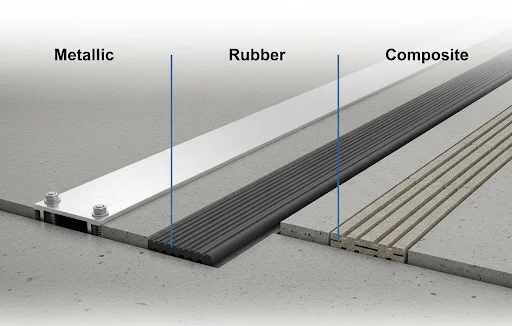
Methods of seismic joint covering and related products
After creating the seismic joint, its covering is very important to prevent the entry of water, dust, insects, and even reduction of building aesthetics. Seismic joint covering can be done with various materials such as galvanized sheets, styrofoam, cement, aluminum profiles, or elastic rubbers. In modern methods, special profiles such as M series from Agor Company are used, which have high thermal and seismic resistance. These products are not only safe but also preserve the building’s appearance with beautiful design.
For example, covering with composite sheets can enhance facade beauty, while polyurethane materials work excellently for waterproofing. The cost of covering in 2024 (1403 SH) is about 500,000 to 2 million Tomans per square meter, depending on the material. In tall commercial or residential buildings, the cover must have the ability to absorb movement up to 50 mm so as not to tear during severe earthquakes. The benefits of proper covering include increasing building lifespan, reducing repair costs, and improving property value. In recent projects like Tehran towers, the use of advanced Agor covers has led to a 30% reduction in damage risk.
Common mistakes in implementing seismic joints
- Filling the gap with hard materials
- Using poor-quality covers
- Ignoring sealing details
- Incorrect facade design
National building regulations and criteria
Iran (Regulation 2800)
- Buildings up to 12 meters in height: Minimum distance of 2.5 cm
- Taller buildings: Distance = 1/200 of building height
Example: 30-meter building → 30 ÷ 200 = 0.15 meters (15 cm)
United States (ASCE 7-16)
- Distance is calculated based on the lateral displacement of the structure
Japan
- In the most earthquake-prone regions of the world, the standard distance is greater and emphasis is placed on flexible covers
Benefits and real examples of observing seismic joints
Observing seismic joints has multiple benefits:
- First, increased safety against earthquakes.
- Second, prevention of thermal stresses.
- Third, facilitation of future repairs.
In the Bam earthquake of 2003 (1382 SH), buildings with proper joints were less damaged, while those without joints were completely destroyed. Globally, ASCE 7 standards in the United States are similar to Iran’s Standard 2800, showing that this principle is universal. For supervising engineers, there are 10 key implementation tips, such as placing the joint from the foundation to the roof and not filling it with hard materials.
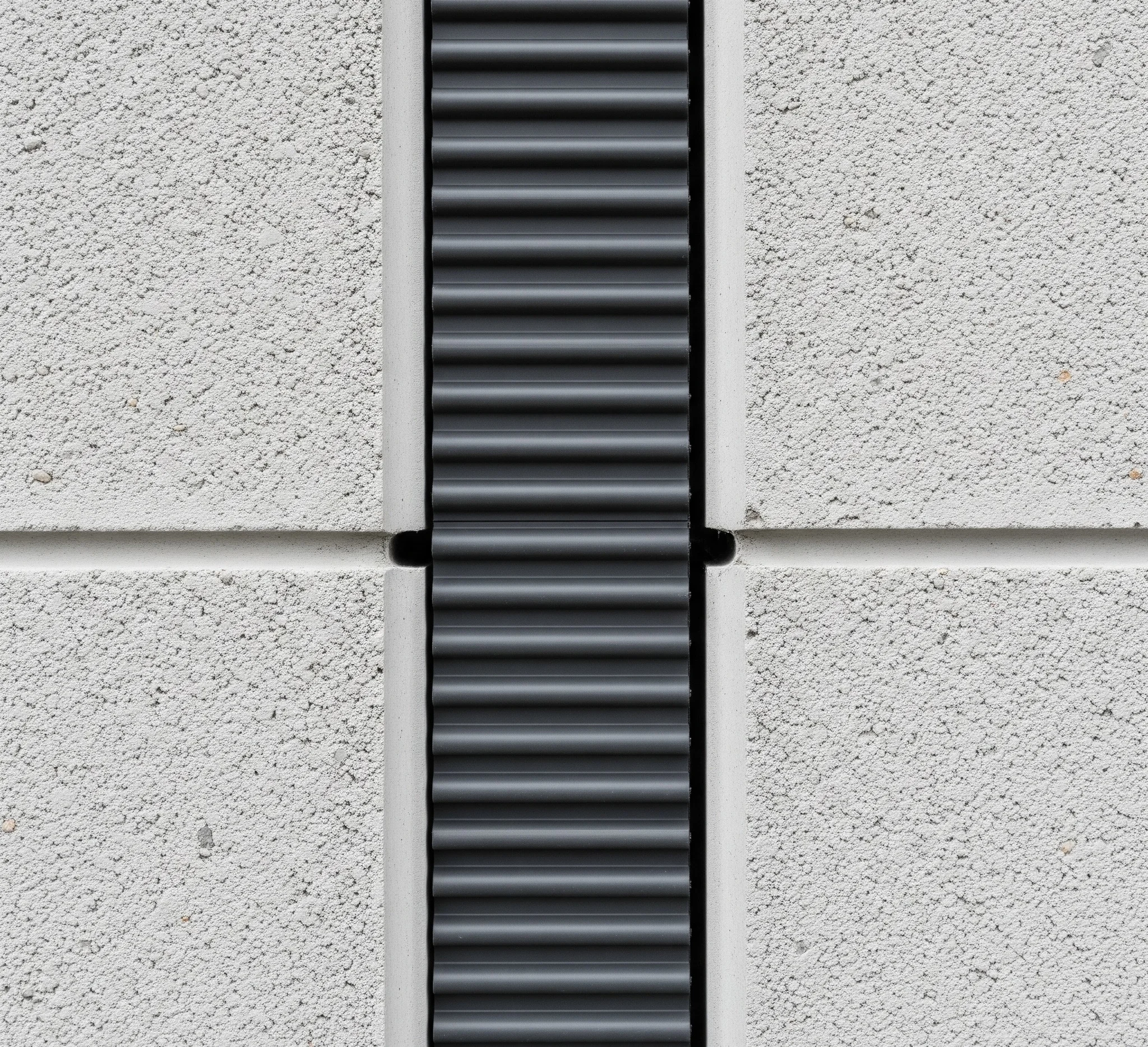
Conclusion
Seismic joint covering is a regulatory requirement and a safety necessity. Observing the standard distance and choosing the right cover results in:
- Protection of human lives
- Reduction of economic losses
- Increase in building useful life
To purchase standard products, you can visit Agor’s store.
FAQ
1. What is a seismic joint?
A seismic joint is a safe distance between two adjacent buildings created to prevent collision during an earthquake. This distance is calculated based on height and regulations, and its covering is done with elastic materials.
2. How is the seismic joint distance calculated?
According to Standard 2800, the minimum distance is 0.005 times the building height (minimum 5 cm). For tall buildings, dynamic analysis is used.
3. What is the best method for seismic joint covering?
The best method is to use aluminum or elastic rubber profiles like Agor products, which are both safe and beautiful. Avoid hard materials like cement to allow free movement.